
Custom Fiber Laser Cutting Services for OEM & Industrial Parts
ATT Machine provides custom fiber laser cutting services for OEMs, manufacturers, distributors and industrial buyers. We manufacture laser-cut metal parts from customer drawings, supporting prototypes, low-volume orders and repeat production.
Based in Ho Chi Minh City, Vietnam, our manufacturing workflow can combine laser cutting, CNC bending, machining, welding and finishing to deliver production-ready components rather than cut blanks only.
Send us your drawing, material, thickness and quantity for a project-specific quotation.
Laser Cutting Capabilities at a Glance
| Capability | ATT Machine |
|---|---|
| Process | CNC Fiber Laser Cutting |
| Materials | Stainless steel, carbon steel, aluminum, brass, copper* |
| Production | Prototype, low volume and repeat production |
| File formats | DXF, DWG, STEP, IGES, PDF |
| Parts | Brackets, panels, enclosures, machine parts and custom components |
| Secondary processes | Bending, machining, welding and finishing |
| Manufacturing location | Ho Chi Minh City, Vietnam |
| Service model | OEM / Custom Manufacturing |
*Material availability and maximum thickness depend on the actual grade, machine capability and part requirements.
What Is Fiber Laser Cutting?
Fiber laser cutting uses a focused laser beam to cut metal along a programmed profile. Compared with conventional mechanical cutting, the process does not require a dedicated cutting die, making it suitable for complex profiles, prototypes and changing production requirements.
For OEM manufacturing, the important factors are not simply cutting speed. Material, thickness, geometry, tolerance, edge quality and downstream operations all affect the final part.
That is why ATT Machine reviews the drawing and manufacturing requirements before production.
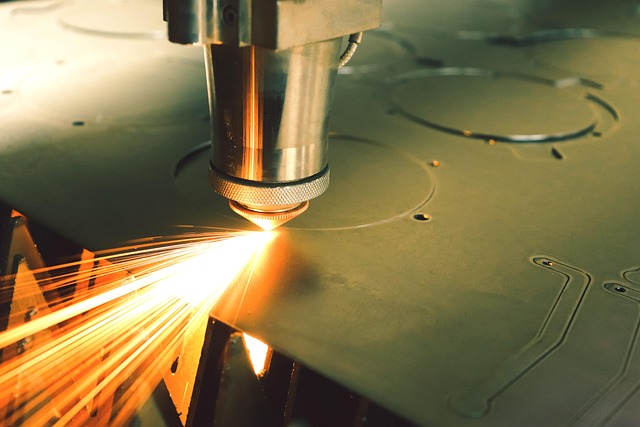
We use state-of-the-art fiber lasers (up to 40mm thickness capability) for thin to thick industrial metals.
Custom CNC Laser Cutting for OEM Parts
Our laser cutting service is designed for build-to-print manufacturing.
Typical parts include:
-
Mounting brackets
-
Machine covers
-
Panels and plates
-
Electrical enclosures
-
Equipment frames
-
Guards and shields
-
Flanges
-
Structural components
-
Custom OEM sheet metal parts
For parts that require additional forming or assembly, laser cutting can be integrated with bending, welding, machining and finishing in the same manufacturing workflow.
Materials We Laser Cut
Stainless Steel
Common grades such as 304 and 316 are used for equipment, enclosures, food-processing components, medical equipment and industrial applications.
Carbon and Mild Steel
Carbon steel is widely used for brackets, machine components, frames, guards and structural parts.
Aluminum
Aluminum grades such as 5052 and 6061 are commonly selected where low weight, corrosion resistance or machinability is important.
Brass and Copper
These materials can be used for electrical, industrial and decorative components where their conductivity or appearance is required.
Material grade and thickness should always be specified on the drawing or RFQ so the cutting process can be selected correctly.
Laser Cutting Thickness and Part Size
Laser cutting capability depends on more than laser power.
Actual cutting performance can be affected by:
-
Material grade
-
Sheet thickness
-
Material flatness
-
Part geometry
-
Hole and slot dimensions
-
Required edge quality
-
Heat input
-
Production quantity
For this reason, ATT Machine confirms the applicable material and thickness range against the actual machine and production requirement rather than applying one generic tolerance or thickness claim to every part.
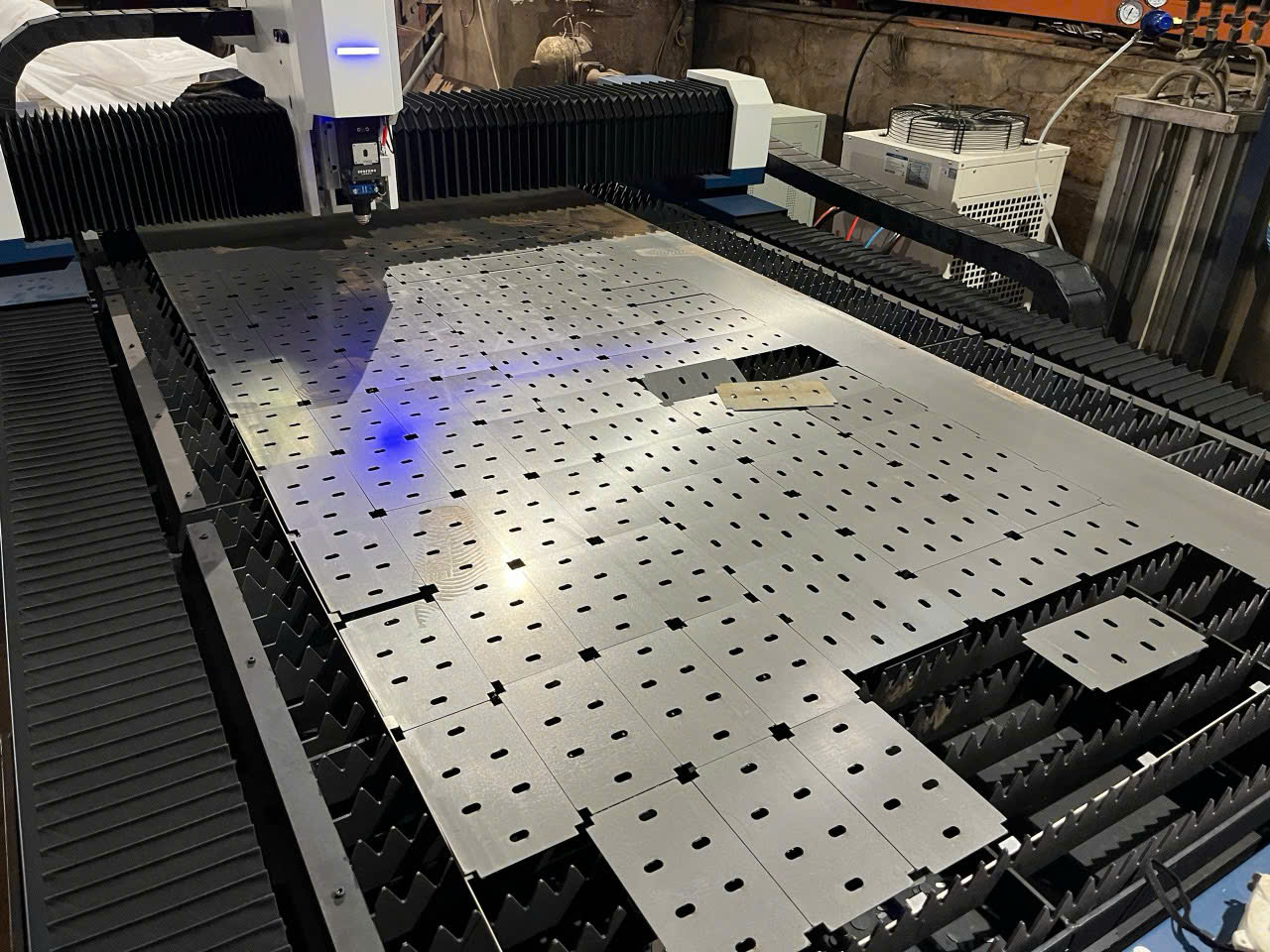
"ATT MACHINE delivered our stainless steel enclosures with perfect bends and zero defects—faster than our previous suppliers in China." – Procurement Manager, European Electronics Firm
Laser Cutting Accuracy and Edge Quality
A production-quality laser-cut part requires more than a clean outline.
Important characteristics include:
-
Dimensional accuracy
-
Hole and slot size
-
Profile geometry
-
Edge condition
-
Burr and dross control
-
Heat-affected areas
-
Surface protection
The achievable tolerance depends on material, thickness, geometry and the required inspection method.
For critical dimensions, customers should identify the tolerances directly on the engineering drawing. This allows the manufacturing team to determine the appropriate cutting and inspection process.
Design for Laser Cutting: DFM Guidelines
A good laser-cut design reduces production problems and unnecessary cost.
Hole and Feature Size
Very small holes, narrow slots and closely spaced features become more difficult as sheet thickness increases. Feature dimensions should be evaluated against the material and cutting process.
Hole-to-Edge Distance
Holes positioned too close to an edge can affect part stability during cutting and may distort the finished component.
Corners and Small Features
Extremely small internal corners and dense features may increase heat concentration and reduce edge quality.
Tolerance Requirements
Not every dimension needs the same tolerance. Applying unnecessarily tight tolerances can increase manufacturing cost without improving product performance.
Downstream Bending
If the laser-cut part will later be bent, hole locations, bend relief, flange dimensions and bend-to-feature distances should be reviewed before cutting.
This is why DFM review before production can be valuable for OEM projects.
From CAD Drawing to Finished Metal Parts
ATT Machine can manufacture from common engineering files including:
-
DXF
-
DWG
-
STEP / STP
-
IGES
-
PDF
The typical workflow is:
CAD Drawing → DFM Review → Material Planning → Laser Cutting → Inspection → Secondary Processing → Packaging → Delivery
For 2D laser profiles, DXF and DWG files are particularly useful. STEP and IGES files can provide additional design information when the laser-cut component is part of a larger assembly.
Laser Cutting + Secondary Manufacturing
Many OEM components require more than laser cutting.
ATT Machine can combine laser cutting with:
CNC Bending
Convert flat laser-cut blanks into brackets, housings, covers and formed components.
CNC Machining
Add precision holes, threads, milled surfaces or other machined features where required.
Welding
Join laser-cut components into frames, enclosures and fabricated assemblies.
Surface Finishing
Depending on the project, parts can proceed to suitable finishing processes after fabrication.
This integrated approach helps reduce the need to coordinate multiple suppliers for a single metal component.
Quality Control for Laser-Cut Parts
Quality inspection is based on the requirements defined by the customer drawing and production order.
Typical checks include:
-
Material and thickness
-
Overall dimensions
-
Hole and slot dimensions
-
Critical tolerances
-
Cut edge condition
-
Quantity
-
Visual defects
-
Secondary-process dimensions
When required and available for the project, manufacturing documentation can include inspection records and material documentation.
For critical OEM components, the drawing should clearly identify critical dimensions, tolerances and inspection requirements.
Applications of Laser-Cut Metal Parts
ATT Machine supports laser-cut components for a range of industrial applications.
Industrial Machinery
Brackets, mounting plates, guards, covers and machine components.
Electrical and Electronics
Panels, enclosures, mounting components and equipment housings.
Automotive
Prototype components, brackets, shields and production-support parts.
Food and Medical Equipment
Stainless steel panels, housings, guards and fabricated components.
Commercial and Architectural Products
Metal panels, decorative components and custom fabricated parts.
Prototype, Low-Volume and Production Laser Cutting
Laser cutting is particularly useful when customers need flexibility between development and production.
Prototype
Manufacture initial parts for testing, assembly validation and design changes.
Low Volume
Produce custom components without the tooling investment normally associated with stamping.
Repeat Production
Maintain the same drawing, material specification and manufacturing requirements for recurring orders.
For OEM programs, production quantities and annual demand should be provided during quotation so the most appropriate manufacturing route can be evaluated.
What Determines Laser Cutting Cost?
Laser-cutting cost depends on the complete manufacturing requirement, not simply the number of parts.
Key cost factors include:
-
Material type
-
Material thickness
-
Sheet size
-
Cutting length
-
Number of piercings
-
Part quantity
-
Material utilization and nesting
-
Tolerance requirements
-
Bending, welding or machining
-
Surface finishing
-
Packaging and shipping
For an accurate quotation, send the drawing together with material, thickness and quantity.
Our Laser Cutting Manufacturing Process
1. Submit Your Drawing
Send DXF, DWG, STEP, IGES or PDF files.
2. Technical Review
We review material, thickness, geometry, tolerance and manufacturing requirements.
3. Quotation
The project is quoted according to the actual production scope.
4. Production
Approved parts are programmed, nested and processed by CNC fiber laser cutting.
5. Inspection
Finished parts are checked against the applicable drawing and quality requirements.
6. Secondary Manufacturing
Bending, machining, welding or finishing is completed when required.
7. Packaging and Delivery
Parts are packed according to product requirements and prepared for shipment.
Why Choose ATT Machine for Laser Cutting?
Direct Vietnam Manufacturer
ATT Machine manufactures custom metal components in Ho Chi Minh City, Vietnam.
Engineering-Focused Production
We work from customer drawings and consider material, geometry, tolerances and downstream manufacturing requirements.
Integrated Metal Fabrication
Laser cutting can be combined with CNC bending, machining, welding and finishing.
OEM Manufacturing
We support prototypes, low-volume parts and repeat production for industrial customers.
International Orders
Our team supports English communication, technical drawing review and export manufacturing requirements.
Most importantly, we focus on producing parts that are suitable for the customer's next manufacturing or assembly step, not simply cutting metal to a profile.
Laser Cutting for International OEM Buyers
For overseas customers, the most efficient RFQ usually includes:
-
CAD drawing
-
Material grade
-
Sheet thickness
-
Quantity
-
Required tolerances
-
Surface finish
-
Packaging requirements
-
Delivery destination
-
Annual demand, if applicable
Clear technical information allows the manufacturing team to evaluate the production route and identify potential issues before production.
Request a Custom Laser Cutting Quote
Need custom fiber laser cutting for OEM or industrial parts? ATT Machine manufactures custom metal components from customer drawings, supporting prototypes, low-volume and repeat production.
Include:
-
Material
-
Thickness
-
Quantity
-
CAD/PDF drawing
-
Critical tolerances
-
Surface finish
-
Delivery location
Drawing → Technical Review → Quotation → Production → Inspection → Delivery
Send your CAD drawing, material, thickness and quantity for a technical review and project-specific quotation.
ATT Machine – Custom Metal Manufacturing in Vietnam
Phone / WhatsApp: +84 942 127 028
Email: cokhi.anthanhtech@gmail.com
Location: Ho Chi Minh City, Vietnam
Send Your Drawing → Get a Quote → Start Production
FAQ
What materials can ATT Machine laser cut?
We work with common industrial metals including stainless steel, carbon steel, aluminum, brass and copper, subject to material grade and thickness.
What file formats do you accept?
Common formats include DXF, DWG, STEP, IGES and PDF.
Can you manufacture prototype laser-cut parts?
Yes. Laser cutting is suitable for prototype, low-volume and repeat OEM production.
Can laser cutting be combined with bending and welding?
Yes. Laser-cut components can proceed to CNC bending, welding, machining and other secondary processes according to the project.
How do you determine laser cutting tolerance?
Tolerance depends on material, thickness, geometry, machine capability and the dimension specified on the engineering drawing.
What information is needed for a quotation?
Send the drawing, material, thickness, quantity, tolerance requirements, finishing requirements and delivery destination.
Do you manufacture according to OEM drawings?
Yes. ATT Machine provides build-to-print manufacturing based on customer drawings and technical requirements.


