Large Ratchet Buckle Manufacturer in Asia | Ratchet Buckles
Ratchet Buckle Sizes: 1 Inch, 1.5 Inch, 2 Inch, 3 Inch, 4 Inch – Ultimate Guide to Usage, Prices in USD, and More
Whether you're dealing with light parcels on a pickup truck or heavy machinery on a flatbed trailer, understanding ratchet buckle sizes like 1 inch, 1.5 inch, 2 inch, 3 inch, and 4 inch is crucial for selecting the right one. In this comprehensive guide, we'll dive deep into ratchet buckle specifications, how to use a ratchet buckle step by step, prices in USD for both wholesale and retail, materials, applications, maintenance tips, and frequently asked questions. This article is designed to help you make informed decisions, ensuring safety and efficiency in your logistics or DIY projects.
If you're searching for "ratchet buckle size 1 inch," "how to use ratchet buckle," or "ratchet buckle price USD," you've come to the right place. We'll cover everything you need to know to rank highly in your cargo securing needs, with practical advice backed by industry standards.

Lashing Textiles for Cargo Control | An Thanh Tech.
What is a Ratchet Buckle? Understanding the Basics
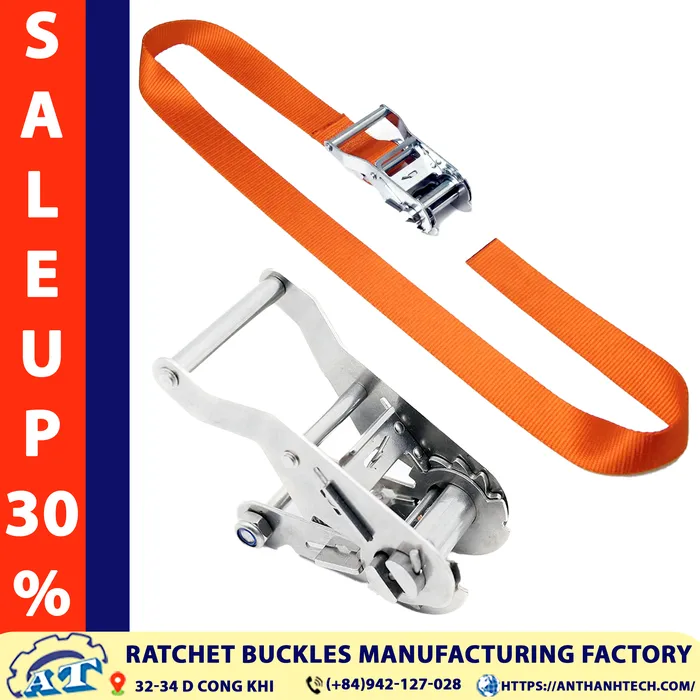
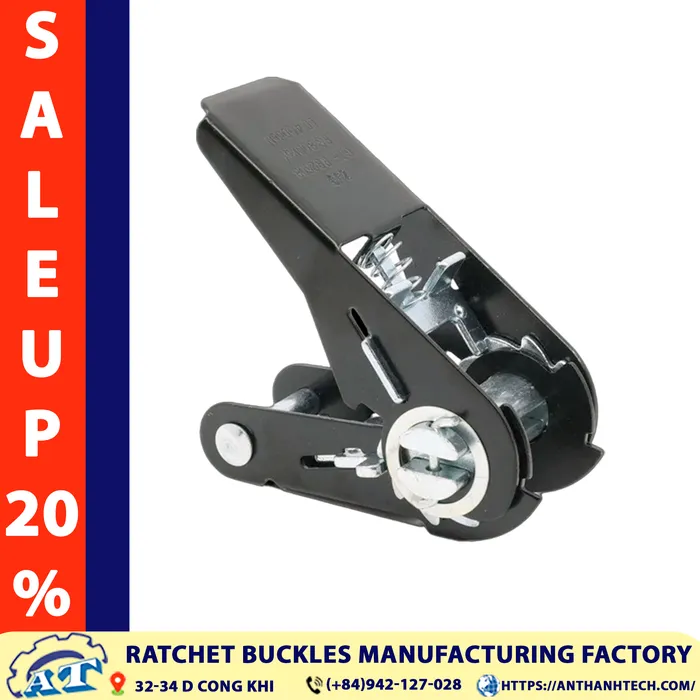
A ratchet buckle is a mechanical fastening device used primarily with tie-down straps to secure cargo. It features a lever mechanism that allows for precise tensioning of webbing, ensuring no slippage under load. The core mechanics involve a round gear or linear rack with asymmetrical teeth and a spring-loaded pawl that engages these teeth. This design permits motion in one direction (tightening) while preventing reverse movement, making it ideal for maintaining tension.
Historically, ratchet mechanisms date back to early mechanical innovations, evolving from simple one-way devices in tools like socket wrenches to specialized cargo applications. In cargo securing, ratchet buckles became popular in the mid-20th century with the rise of commercial trucking and logistics. Today, they comply with standards like EN 12195-2 for load restraint, ensuring they meet international safety requirements.
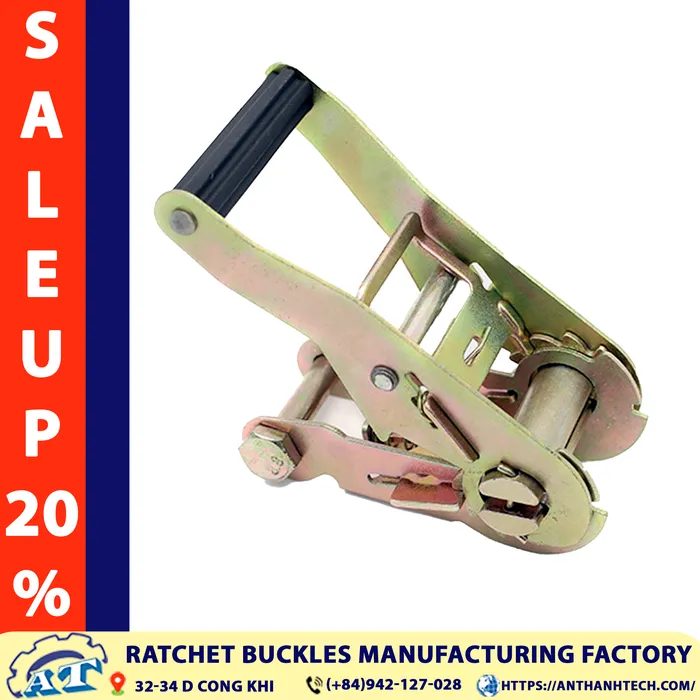
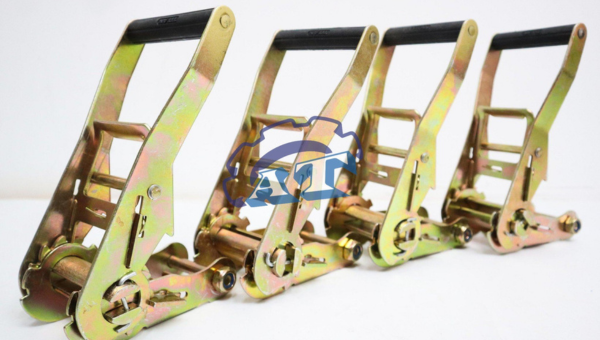
Ratchet buckles are typically made from high-grade steel, zinc-plated for corrosion resistance, or alloy materials for added strength. Some models include ergonomic handles or plastic coatings for better grip. The key advantage is their ability to provide superior strength compared to cam buckles, with breaking strengths ranging from 1,500 lbs for smaller sizes to over 20,000 lbs for larger ones.
Why choose a ratchet buckle? They offer versatility across industries, from logistics and transportation to construction and outdoor activities. Unlike basic knots or bungee cords, ratchet buckles provide controlled tension, reducing the risk of load shifts that could cause accidents. According to transportation safety data, properly secured loads can prevent up to 80% of cargo-related incidents on roads.
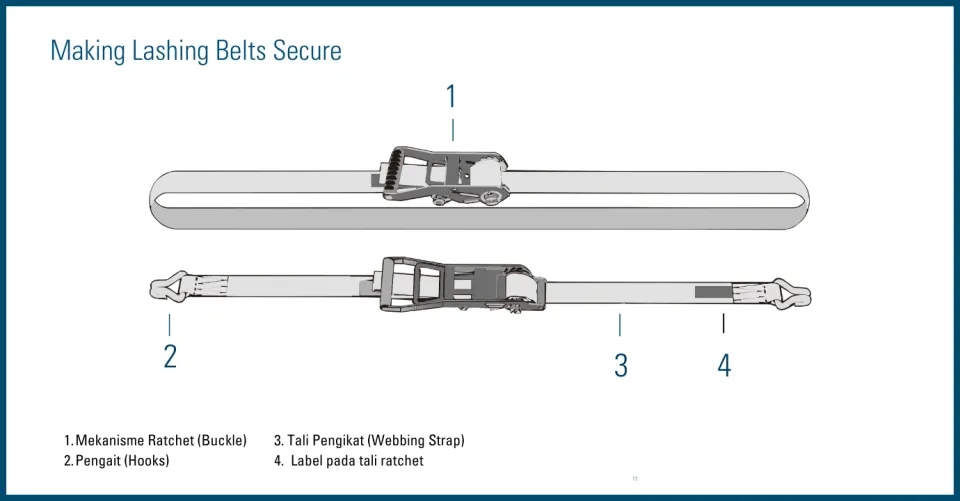
How to Use Ratchet Tie Down, Tips and Component Details
Ratchet Buckle Sizes: Detailed Specifications for 1 Inch, 1.5 Inch, 2 Inch, 3 Inch, and 4 Inch
Selecting the correct ratchet buckle size is essential for matching your load's weight and type. Sizes refer to the compatible webbing width, directly impacting the buckle's breaking strength and working load limit (WLL). The WLL is typically one-third of the breaking strength, providing a safety margin. Below, we break down each size with specifications, including typical breaking strength, WLL, and common applications.
1 Inch Ratchet Buckle
The 1 inch ratchet buckle is compact and ideal for light-duty tasks. Compatible with 25mm webbing, it offers breaking strengths from 1,500 to 4,500 lbs (about 0.7 to 2 tons). WLL ranges from 500 to 1,500 lbs. These are perfect for securing motorcycles, small parcels, or luggage on roof racks. For example, in recreational use, a 1 inch buckle can handle ATVs or kayaks without overkill.
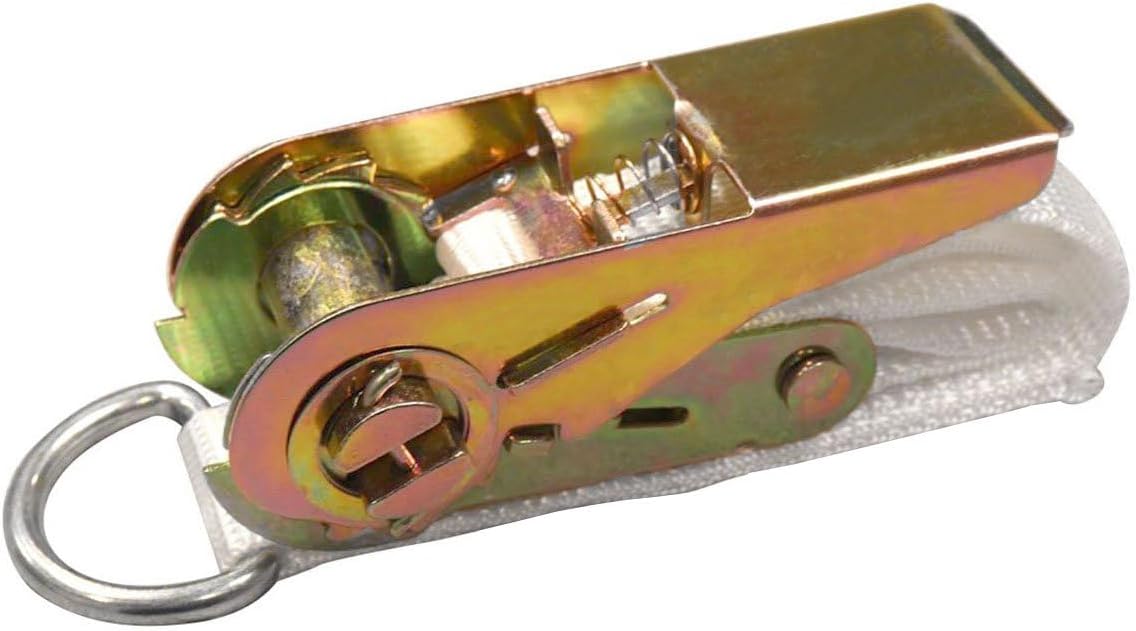
Withstands loads up to 800 kgs
1.5 Inch Ratchet Buckle
Stepping up, the 1.5 inch (38mm webbing) buckle provides more robustness, with breaking strengths of 3,000 to 5,500 lbs (1.5 to 2.5 tons) and WLL of 1,000 to 1,833 lbs. It's suited for medium loads like furniture, appliances, or ATVs. In construction, it's often used for bundling materials like lumber or pipes.
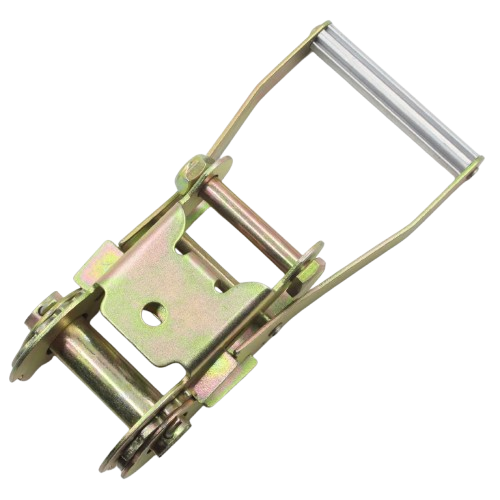
With a load capacity of up to 1.5 tons.
2 Inch Ratchet Buckle
The most common size for general trucking, the 2 inch (50mm) buckle boasts breaking strengths of 7,000 to 11,000 lbs (3 to 5 tons) and WLL of 2,333 to 3,667 lbs. This size excels in heavy-duty applications, such as securing equipment on flatbed trailers or vehicles in auto transport.
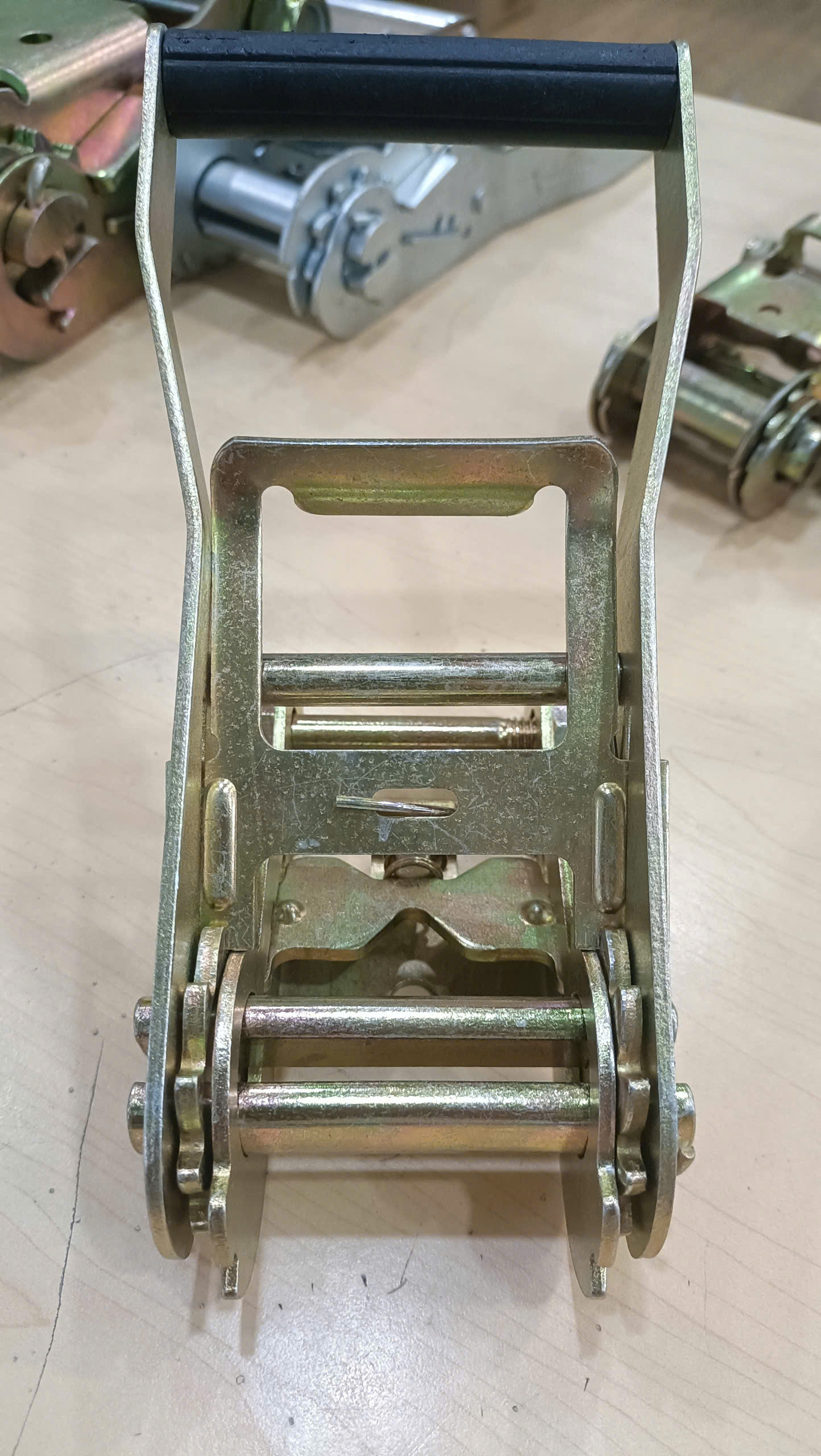
Load capacity from 2 to 3 tons
3 Inch Ratchet Buckle
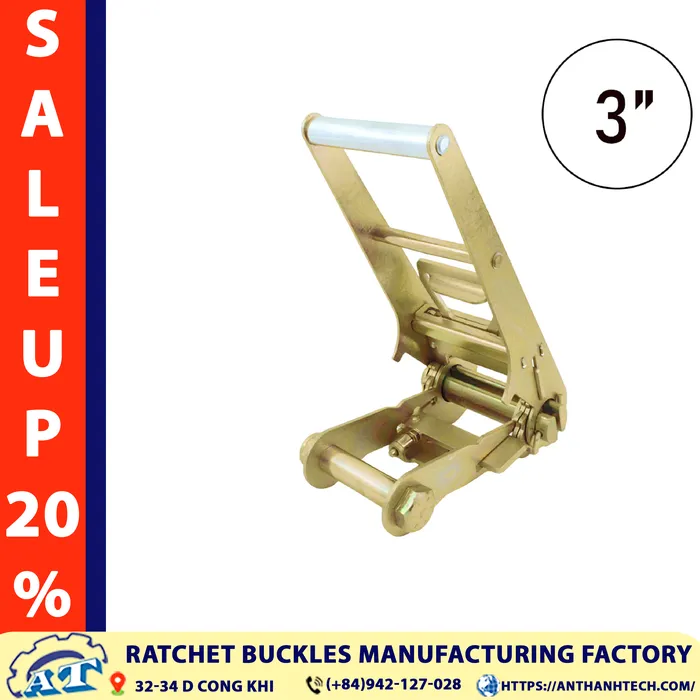
For professional logistics, the 3 inch (75mm) buckle handles breaking strengths of 15,000 to 20,000 lbs (7 to 10 tons) with WLL up to 6,667 lbs. It's designed for large machinery, construction materials, or oversized loads in commercial shipping.

Breaking capacity from 8 to 10 tons
4 Inch Ratchet Buckle
The heavyweight champion, the 4 inch (100mm) buckle offers breaking strengths exceeding 20,000 lbs (10+ tons) and WLL over 6,667 lbs. Used for extreme industrial loads like heavy equipment or steel beams, it's essential in sectors like mining or heavy haulage.
| Ratchet Buckle Size | Webbing Width | Breaking Strength (lbs/tons) | Working Load Limit (lbs) | Common Applications |
|---|---|---|---|---|
| 1 Inch | 25mm | 1,500–4,500 / 0.7–2 | 500–1,500 | Light loads, motorcycles, parcels |
| 1.5 Inch | 38mm | 3,000–5,500 / 1.5–2.5 | 1,000–1,833 | Medium cargo, furniture, ATVs |
| 2 Inch | 50mm | 7,000–11,000 / 3–5 | 2,333–3,667 | Trucks, equipment, general hauling |
| 3 Inch | 75mm | 15,000–20,000 / 7–10 | 5,000–6,667 | Large machinery, professional logistics |
| 4 Inch | 100mm | 20,000+ / 10+ | 6,667+ | Oversized industrial loads |
Always check manufacturer ratings, as variations exist based on material quality. Exceeding WLL can lead to failures, so calculate your load weight and add a safety factor.
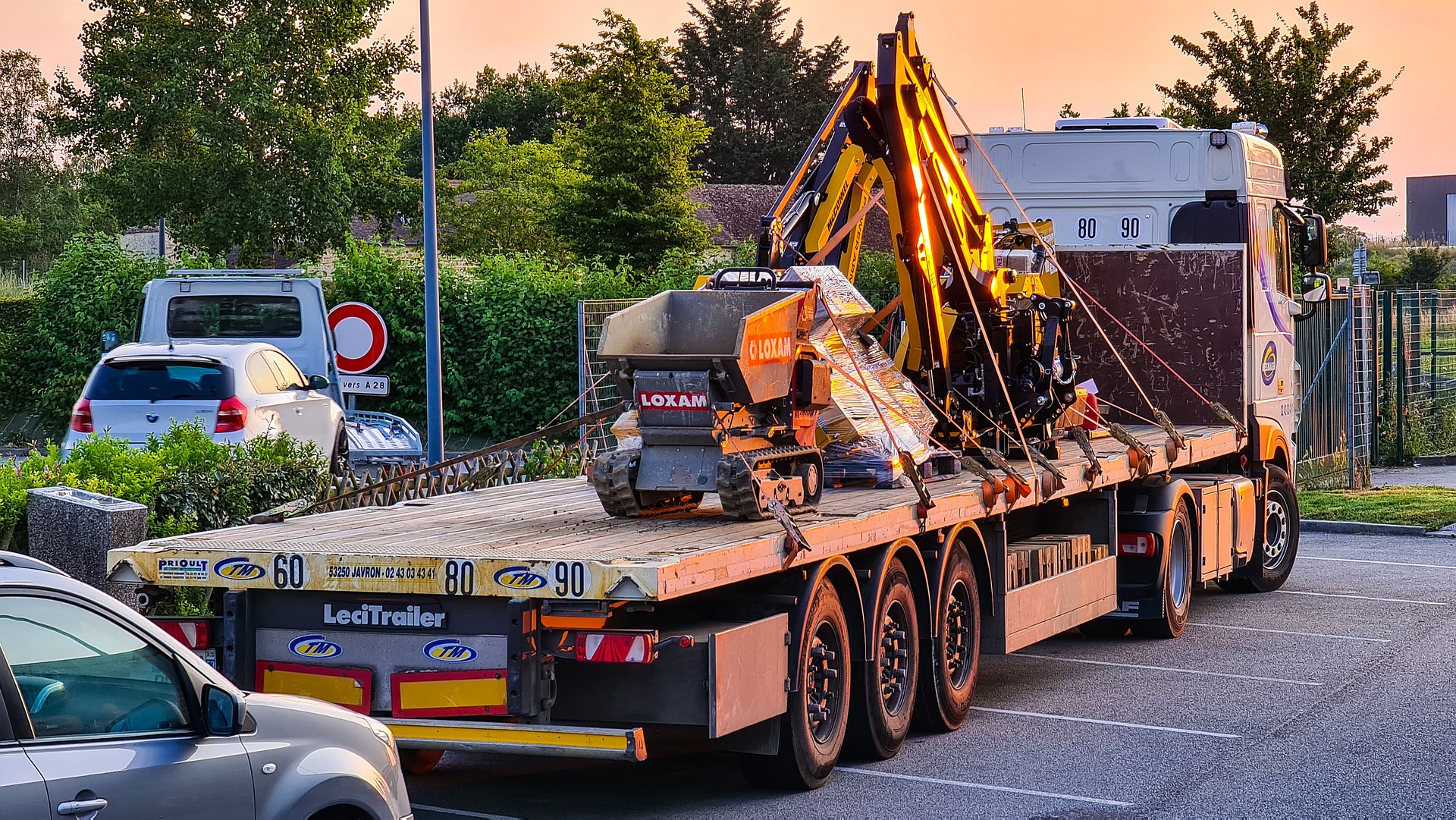
The main uses of a ratchet buckle.
How to Use a Ratchet Buckle: Step-by-Step Guide with Safety Tips
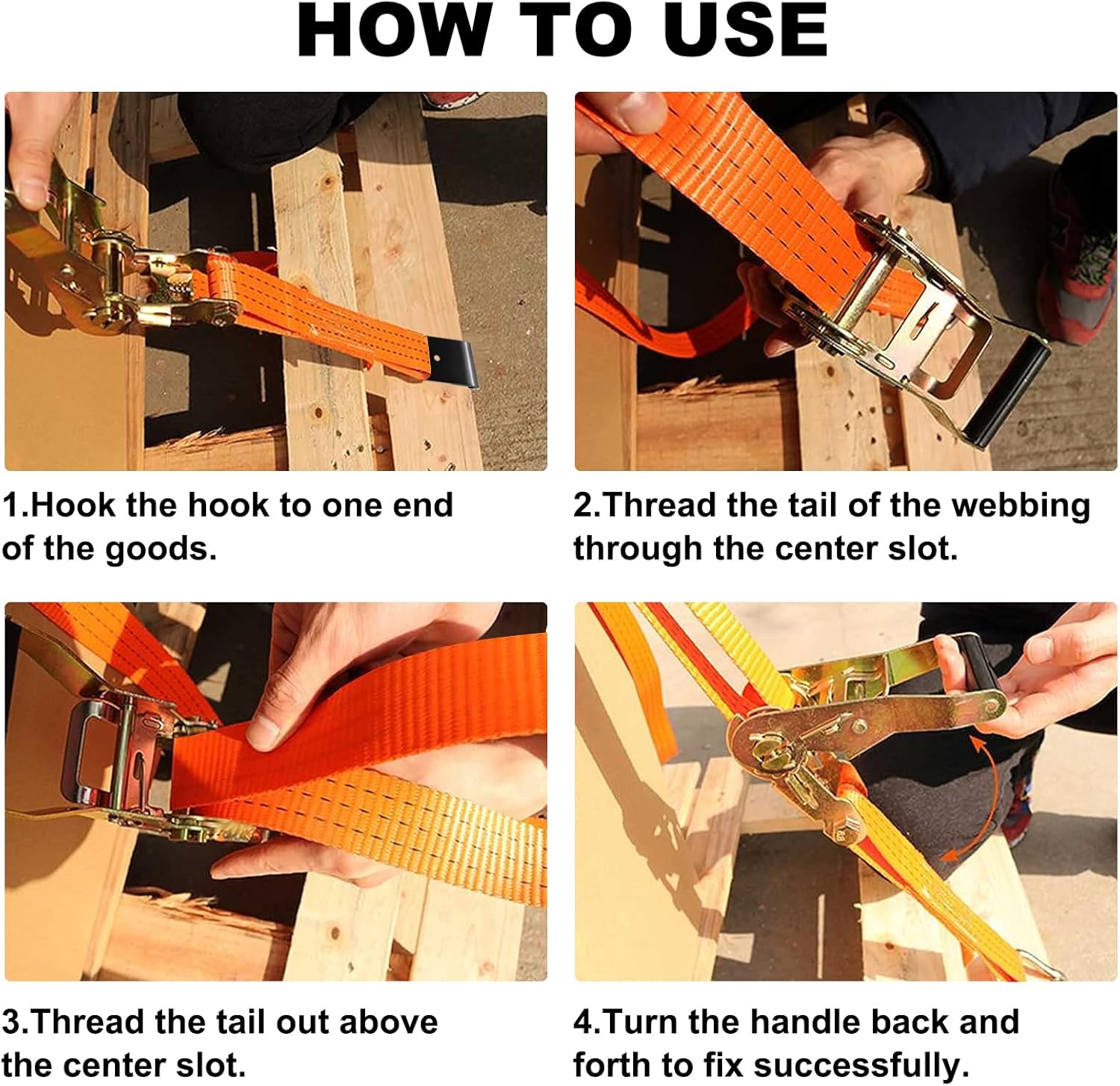
Learning how to use a ratchet buckle properly is vital for safety. Improper use can result in load shifts, accidents, or equipment damage. Follow this detailed step-by-step guide, complete with tips to avoid common mistakes.
Step 1: Inspect the Buckle and Strap
Before use, examine the ratchet buckle for damage like bent teeth, rust, or worn pawls. Check the webbing for cuts, frays, or UV degradation. Discard any compromised items – safety first!
Step 2: Open the Ratchet
Press the release lever and open the handle fully flat (past 180 degrees). This exposes the mandrel (spool) for threading.
Step 3: Thread the Strap
Feed the loose end of the webbing through the bottom slot of the mandrel from underneath. Pull through enough length to reach your anchor points.
Step 4: Attach Hooks
Secure the fixed end (with hook) to a stable anchor on your vehicle or trailer. Drape the strap over the cargo and attach the loose end's hook to the opposite anchor. Ensure no twists in the strap.
Step 5: Remove Slack
Pull the loose strap by hand to eliminate initial slack, ensuring the strap lies flat against the load.
Step 6: Tighten the Strap
Close the handle partially and ratchet it up and down. Each pump tightens the strap. Aim for firm tension without over-tightening, which could damage cargo or strap.
Step 7: Lock and Secure
Once tight, close the handle fully to lock the pawl. Tug on the strap to confirm it's secure.
Step 8: Release the Buckle
To loosen, press the release lever, open the handle flat, and pull the strap free from the mandrel.
Safety Tips for Using Ratchet Buckles
- Never exceed the WLL; use multiple straps for heavy loads.
- Wear gloves to avoid pinched fingers during ratcheting.
- Position straps at angles no greater than 45 degrees for optimal hold.
- Periodically check tension during transit, as loads can settle.
- Avoid using on sharp edges without edge protectors.
- Comply with DOT regulations for commercial use, requiring at least four straps for loads over 10,000 lbs.
- For wet conditions, choose corrosion-resistant models.
Mastering these steps can prevent accidents – studies show that 25% of trucking incidents stem from poor load securing.
Ratchet Buckle Prices in USD: Wholesale vs. Retail Breakdown
Ratchet buckle prices in USD vary based on size, material, quantity, and whether you're buying buckle-only or full strap assemblies. Wholesale prices are lower for bulk orders (e.g., 500+ units), while retail includes markups from stores like Amazon or Home Depot. Here's a breakdown for 1 inch to 4 inch sizes.
1 Inch Ratchet Buckle Price
- Buckle only: Wholesale $3–$5 USD; Retail $8–$13 USD.
- Full strap (12–15 ft): Wholesale $10–$15 USD; Retail $15–$30 USD.
1.5 Inch Ratchet Buckle Price
- Buckle only: Wholesale $4–$7 USD; Retail $10–$15 USD.
- Full strap (15–20 ft): Wholesale $15–$20 USD; Retail $20–$40 USD.
2 Inch Ratchet Buckle Price
- Buckle only: Wholesale $6–$10 USD; Retail $12–$20 USD.
- Full strap (27–30 ft): Wholesale $20–$30 USD; Retail $25–$60 USD.
3 Inch Ratchet Buckle Price
- Buckle only: Wholesale $10–$15 USD; Retail $20–$30 USD.
- Full strap (30 ft+): Wholesale $40–$50 USD; Retail $50–$100 USD.
4 Inch Ratchet Buckle Price
- Buckle only: Wholesale $15–$25 USD; Retail $30–$50 USD.
- Full strap (30 ft+): Wholesale $60–$80 USD; Retail $80–$150+ USD.
Factors influencing prices: Stainless steel models cost 20–50% more for corrosion resistance. Bulk discounts can reduce wholesale by 10–30%. Shop around international suppliers for competitive rates, but factor in shipping.

The largest ratchet buckle manufacturer in Asia.
Types of Ratchet Buckles: Materials and Variations
Ratchet buckles come in various types to suit different needs:
- Standard Steel: Affordable, high strength, but prone to rust.
- Zinc-Plated: Corrosion-resistant for outdoor use.
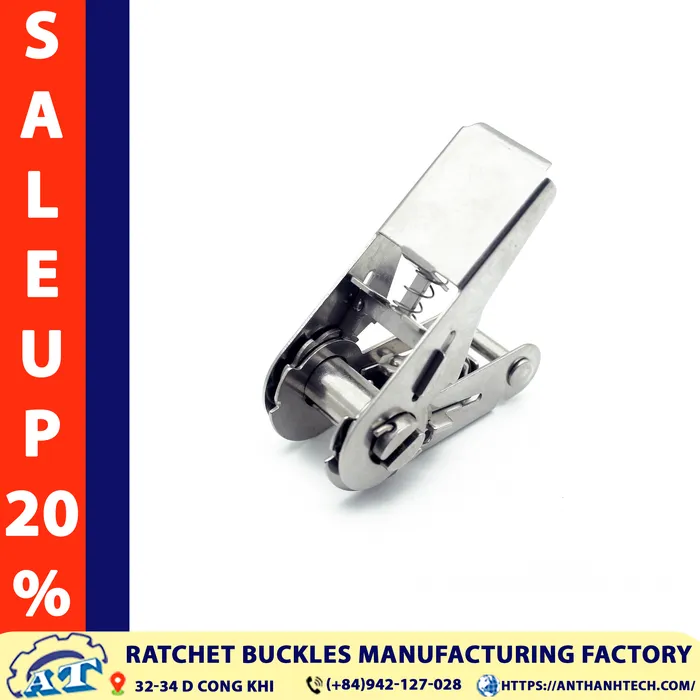
- Stainless Steel (304/316): Premium for marine or harsh environments, with 316 offering superior salt resistance.
- Ergonomic Handle: Padded or extended for easier operation.
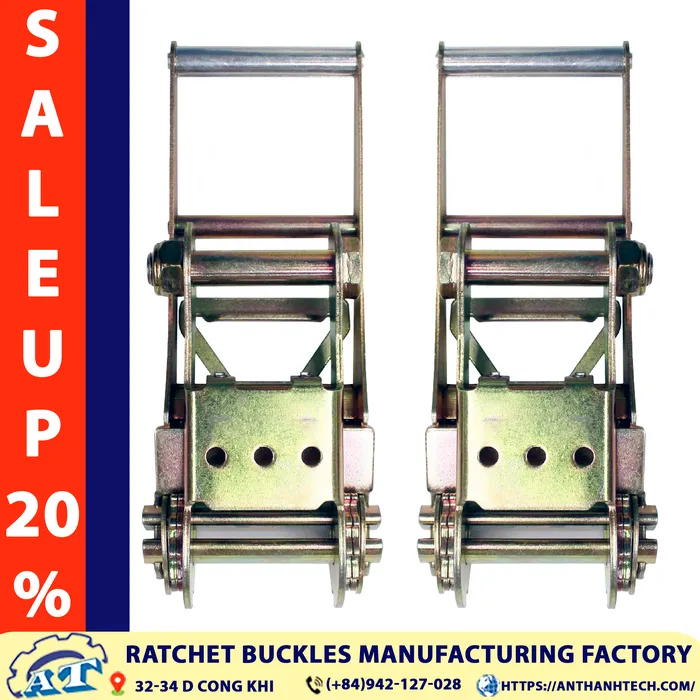
- Wide-Handle: For heavy-duty sizes like 3 inch and 4 inch.
Other variations include auto-retracting models or those with double-release mechanisms. Polyester webbing is standard, but nylon or polypropylene options exist for specific applications.
Applications of Ratchet Buckles Across Industries
Ratchet buckles shine in diverse scenarios:
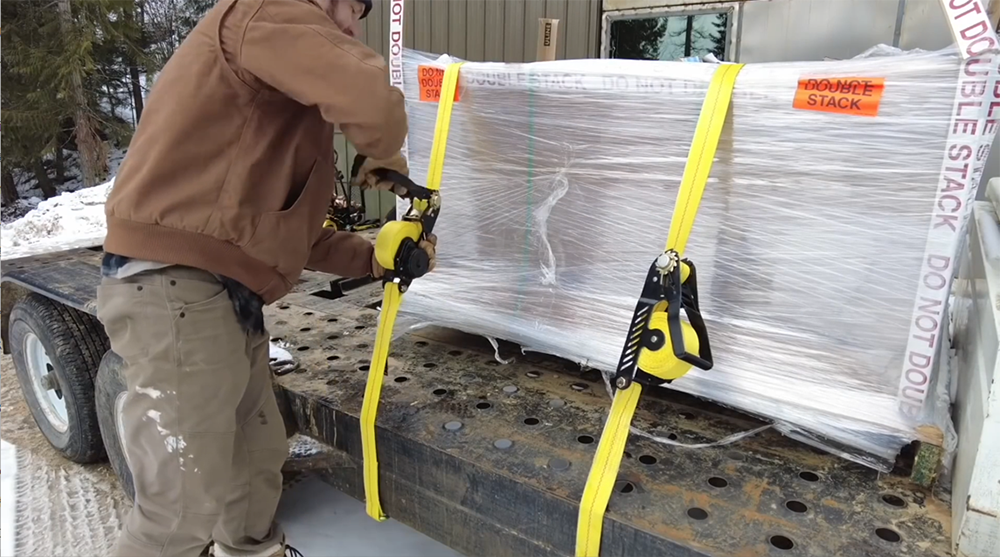
- Logistics & Transportation: Securing pallets on trucks; 2 inch and 3 inch sizes dominate.
- Construction: Bundling rebar or wood; 1.5 inch for medium materials.
- Manufacturing & Warehousing: Holding inventory stacks.
- Outdoor & Marine: Tying down boats or tents; stainless models prevent rust.
- Automotive: Transporting vehicles; 4 inch for heavy hauls.
In real-world examples, flatbed trailers use multiple 2 inch buckles for machinery, while pickup trucks rely on 1 inch for everyday loads.
Maintenance and Care for Longevity
Proper maintenance extends ratchet buckle life:
- Cleaning: Hose with water; avoid harsh chemicals. Dry fully to prevent rust.
- Storage: Wrap webbing around the buckle; store in dry, UV-protected areas.
- Lubrication: Apply light oil to moving parts quarterly.
- Inspection: Check for wear every use; replace if damaged.
- Lifespan: Heavy-use straps last 1–2 years; light-use up to 3–5 years.
Following these tips can save costs and ensure compliance with safety standards.
Frequently Asked Questions (FAQs) About Ratchet Buckles
What is the difference between breaking strength and WLL?
Breaking strength is the maximum force before failure; WLL is one-third of that for safety.
How many ratchet buckles do I need for a load?
At least two per side for most loads; four or more for over 10,000 lbs per DOT rules.
Can I use a 1 inch buckle for heavy loads?
No; stick to appropriate sizes to avoid failures.
Are ratchet buckles better than cam buckles?
Yes, for heavy tension; cam buckles are quicker for light use.
Where can I buy ratchet buckles at the best price in USD?
Wholesale from manufacturers; retail from Amazon or specialty stores.
Buying Guide: Choosing the Best Ratchet Buckle for Your Needs
When purchasing, consider load weight, environment, and budget. Look for certifications like FMCSA compliance. Read reviews for durability. For international shipping, opt for global suppliers offering bulk deals.
In conclusion, ratchet buckle sizes from 1 inch to 4 inch offer solutions for every need, with clear guides on how to use them and competitive prices in USD. By following this advice, you'll secure loads safely and efficiently. For custom needs, consult experts to optimize your setup.